Our story
A heritage woven by hand
A tradition shaped by women, ingenuity and generations of knowledge.
Where it comes from
More than a way of making cloth
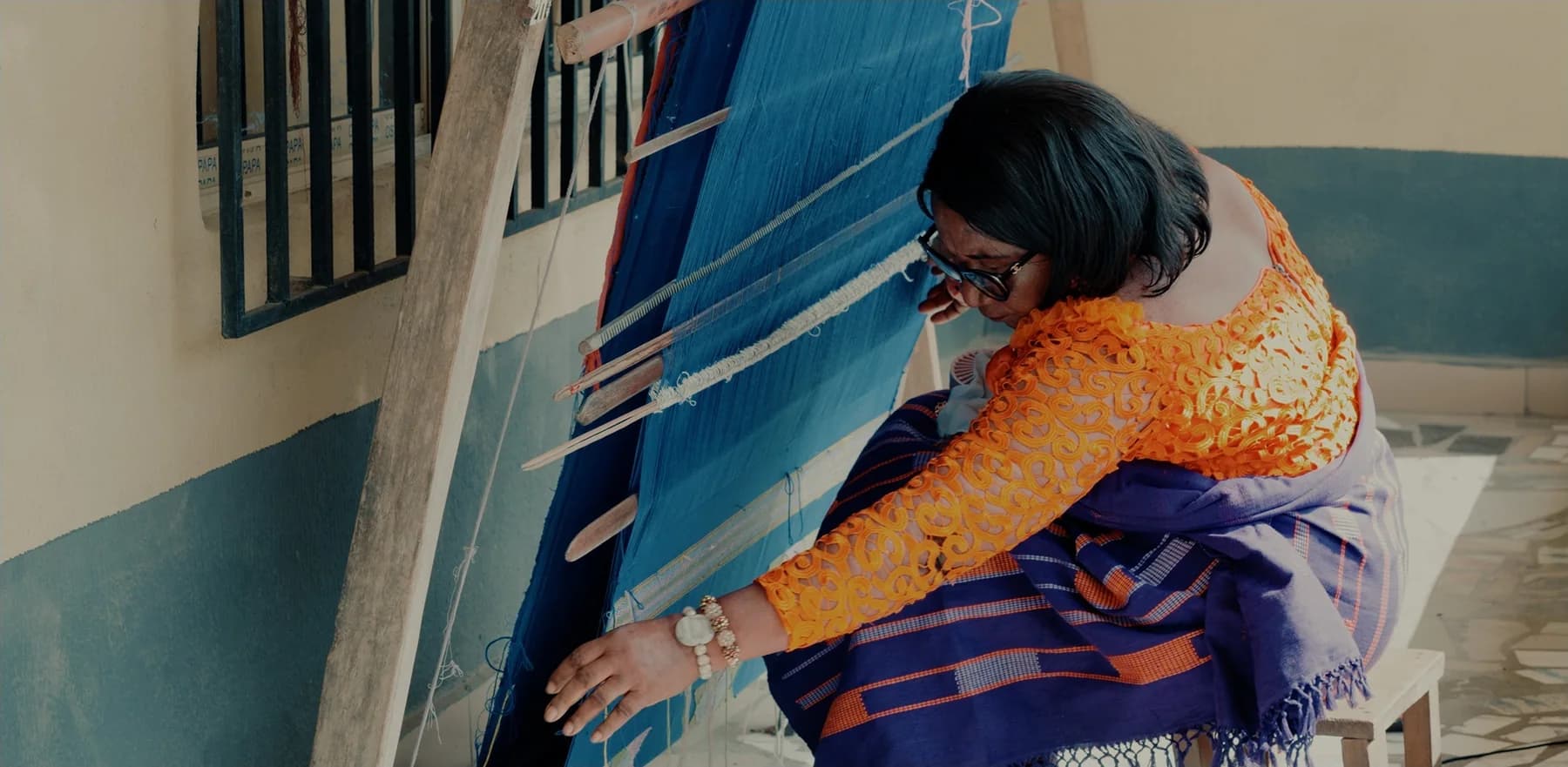
In Akwete, an Ndoki community in Ukwa East Local Government Area of Abia State, weaving is more than a way of making cloth. It is a body of knowledge developed, preserved and passed from one generation of women to another.
Known for its wide handwoven form, rich use of colour and intricate patterns, Akwete cloth has a documented history stretching back well over a century. The tradition developed significantly during the nineteenth century, as regional trade brought Akwete weavers into contact with new textiles, coloured yarns and design influences.
A tradition of innovation
Dada Nwakwata
At the centre of Akwete's weaving history is Dada Nwakwata, remembered as one of the great innovators of the craft. Historical accounts associate her with the development of the distinctive wide, single-panel cloth for which Akwete became known.
Her story captures something essential about the tradition: innovation has long existed alongside inheritance.
Woven and preserved by women
A language passed hand to hand
For generations, women have been at the heart of Akwete weaving. Younger girls learned by observing and working alongside mothers, grandmothers and experienced weavers. What passed between generations was not simply a method of production, but a visual language and a source of livelihood.
“For generations, the women of Akwete have been not only the makers of the cloth, but the custodians of the knowledge behind it.”
The craft
Pattern made on the loom, one thread at a time
One of the defining features of Akwete weaving is the wide upright loom. Unlike narrow-strip weaving traditions, it lets the weaver create a broad panel of cloth as a single woven piece.
- Warp
- The vertical threads, held under tension on the loom. They are the foundation of the cloth.
- Weft
- The horizontal threads, worked through the warp row by row to build the fabric.
- Supplementary weft
- Extra threads introduced as the weaver goes, to raise the decorative pattern.
A language of pattern
Shapes from the weaver's world
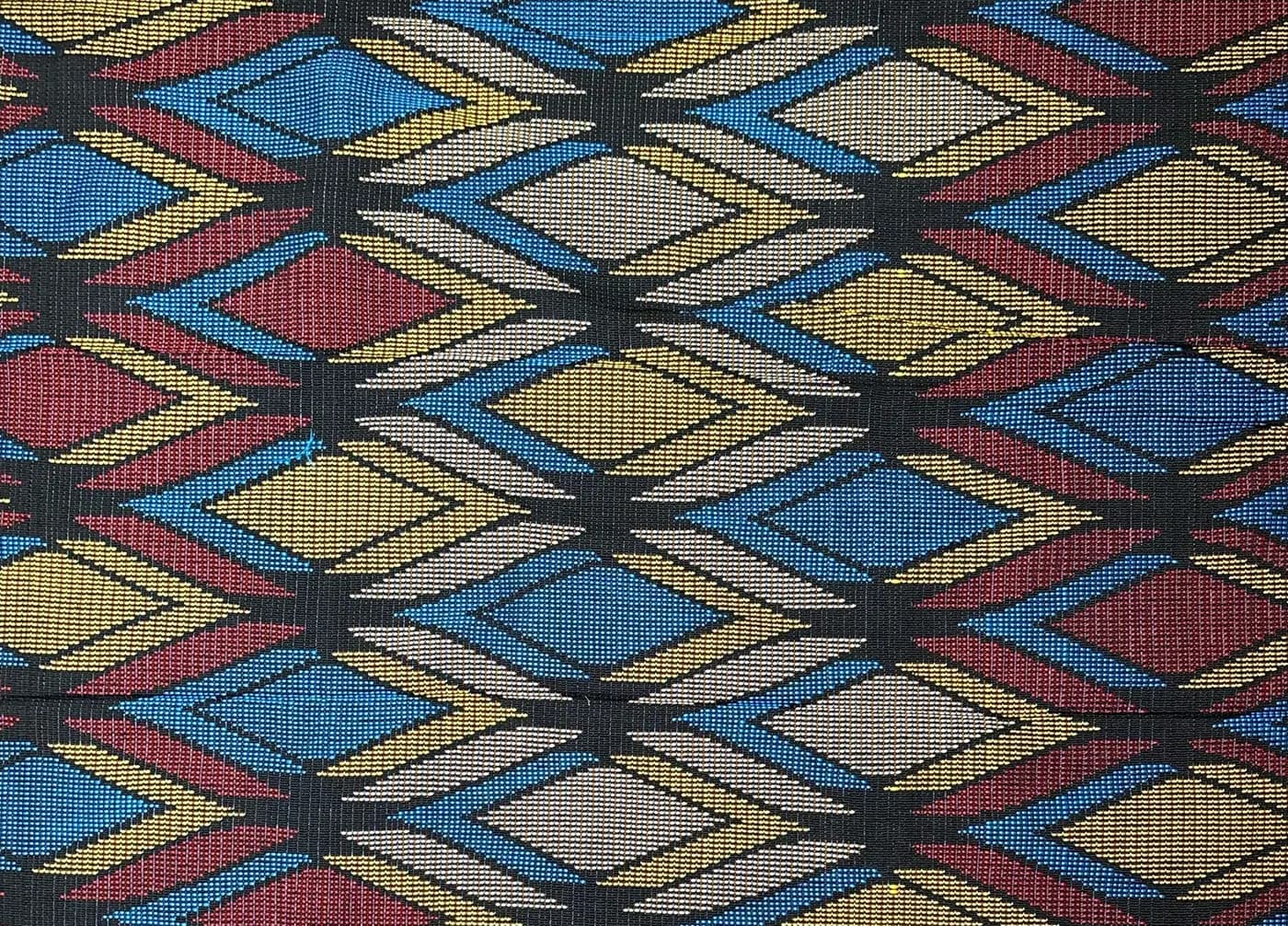
Chevrons, zigzags, diamonds and lozenges, stripes and other geometric forms appear alongside figurative motifs inspired by animals, objects and the world around the weaver.
- Chevrons
- Zigzags
- Diamonds
- Lozenges
- Stripes
- Animals
- Everyday objects
Materials and colours have evolved over time, but the defining principle remains: the design is constructed through weaving.
Today
The women weaving now
Carry the story with you
Every piece in the shop is hand-woven in Akwete and one of a kind — cotton and silk, each priced on its own.
Shop the fabric